


Have you ever walked to your breaker box and found that a switch has stopped working? Maybe your lights keep going out, or one part of your home has no power at all. When that happens, it usually means it is time to do a circuit breaker. It sounds scary, but once you understand what a circuit breaker does and why it sometimes needs to be changed, the whole process becomes much easier to follow.
This guide will walk you through everything you need to know about circuit breaker replacement. We will cover the signs that tell you a breaker is bad, the tools you need, a simple step-by-step process, a beginner-friendly circuit breaker wiring diagram explanation, and key safety tips every homeowner should know. Whether you are looking to replace a circuit breaker in a panel or want to know how to change a circuit breaker the right way, you are in the right place.
What Is a Circuit Breaker? And What Does It Do?
A circuit breaker is a small switch inside your breaker box (also called a panel or fuse box). Its job is to watch how much electricity flows through the wires in your home. If too much electricity tries to pass through at once, the breaker trips (turns off) to stop a fire or damage to your wires.
Think of it like a safety guard. When everything is fine, the breaker stays on, and power flows normally. When something goes wrong, like too many appliances running at once, the breaker flips off to protect your home.
Over time, breakers can wear out. When that happens, you need to do a circuit breaker replacement to get things working safely again.
Read more content on Mediazon
Signs You Need a Circuit Breaker Replacement
Not every tripped breaker needs to be replaced. Sometimes you just need to reset it. But there are clear signs that tell you a breaker has gone bad and needs to come out.
The Breaker Keeps Tripping
If you reset the breaker and it trips again and again, this is a big warning sign. A healthy breaker only trips when there is a real problem. If it keeps tripping without a clear reason, the breaker itself is likely faulty. This is one of the most common reasons people look up how to replace a defective circuit breaker.
The Breaker Will Not Reset
You flip it back to ON, but it goes right back to the middle or OFF position. This means the breaker has failed. It can no longer hold a position, and replacing circuit breakers is the only solution
Burn Marks or Burning Smell
If you see black marks near the breaker or smell something like burnt plastic when you open the panel, the situation is serious. It means the breaker has been overheating. This condition is a fire risk that requires immediate circuit breaker replacement.
Breaker Feels Hot to the Touch
Breakers can feel slightly warm, but if one feels very hot compared to others in the box, it is a sign of a problem inside.
Old Age
Most breakers last 30 to 40 years. If your home is older and the breaks have never been changed, replacing them as part of a panel checkup is a smart move.
Can I Replace a Circuit Breaker Myself?
This is one of the most searched questions: Can I replace a circuit breaker myself?
Yes, many homeowners replace standard branch breakers themselves. But it requires you to follow all safety steps carefully, use the right tools, and know exactly what you are doing. If you are not 100% comfortable around electricity, it is always better to call a licensed electrician.
One critical thing to know right now: You should never try to replace a breaker without shutting off power first. Some people search for “how to replace a breaker without shutting off power.” This practice is extremely dangerous. Even when the main breaker is off, the two thick wires coming into the top of your panel (called service lines) are still live. Touching those can kill you. A professional with proper arc-flash protection equipment handles live panel work, not a DIYer. Always turn off the main breaker before you touch anything inside the panel.
Circuit Breaker Replace vs. Circuit Breaker Fuse Replacement
Many older homes used fuse boxes instead of breaker panels. People often ask, “Can a circuit breaker replace a fuse?” Does a circuit breaker replace a fuse?
Yes, a circuit breaker does the same job as a fuse, but in a smarter way. A fuse blows (burns out) when too much current flows through it, and then you have to replace the fuse. A circuit breaker, on the other hand, simply trips and can be reset. This is why most homes have moved from fuses to breakers.
If you have a breaker box fuse (an older style panel that uses plug fuses), you may need to do a replace fuse in breaker box procedure, or you might consider upgrading the whole panel to modern breakers. Talk to an electrician if you are unsure which one you have.
Tools Needed for Circuit Breaker Replacement
Before you start, gather everything you need. Having the right circuit breaker removal tool and safety gear makes the job go smoothly and safely.
Essential Tools
Here is what you need to safely replace a breaker switch:
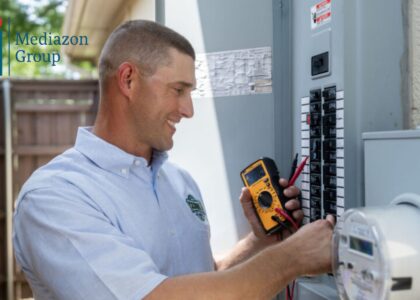
A flathead screwdriver and a Phillips screwdriver are needed to open the panel cover and loosen wire terminals. You will also need a non-contact voltage tester, which is the most important tool in this whole job. It indicates whether electricity is present without requiring you to touch any wires. Insulated gloves protect your hands from accidental contact with live parts. Safety goggles protect your eyes in case of sparks. A flashlight or headlamp helps because breaker boxes are often in dark spots. Needle-nose pliers help you handle wires more easily. Finally, you will need the new circuit breaker itself.
Choosing the Right Replacement Breaker
This step is where many people make a mistake. Not every breaker fits every panel. When you are doing a bolt-on circuit breaker replacement or a standard breaker swap, you need to match the brand, amperage (15A, 20A, 30A, etc.), and the panel model. The easiest way is to take the old breaker to a hardware store and ask for an exact match. Home Depot, for example, carries many common brands for “circuit breaker replacement near me” searches.
How to Replace a Circuit Breaker in a Breaker Box (Step-by-Step)
Here is how to replace a circuit breaker in a panel, written in plain steps anyone can follow.
Step 1: Turn Off All Branch Breakers First
Before you touch anything, turn off every single breaker in the box one by one. Start with the smaller ones, then move to the main breaker last. This is how you change a breaker safely. The main breaker cuts power to all the branch breakers inside the panel.
Step 2: Test With Your Voltage Tester
Use your non-contact voltage tester on the wires near the breaker you plan to remove. If the tester beeps or lights up, stop. Something is still alive. Please refrain from proceeding until you clearly understand the reason. Once the tester shows no voltage, you are safe to continue.
Step 3: Remove the Panel Cover
Use your screwdriver to take off the screws holding the panel cover. Gently lift the cover away and set it aside. You will now see all the breakers and wires inside.
Step 4: Locate the Bad Breaker
Locate the breaker you are replacing. It is often the one that looks burned, will not stay in position, or has the wire that powers the dead circuit.
Step 5: Disconnect the Wire from the Old Breaker
The black wire (called the hot wire or load wire) connects to one side of the breaker. Loosen the terminal screw and pull the wire free. Set it aside carefully. Do not let it touch other parts inside the panel.
Step 6: Remove the Old Breaker
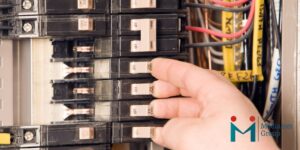
Circuit breakers clip into the panel. To remove one, you rock it outward away from the center bus bar. Pull the outer side up and away, and it will pop free. Some panels use a bolt-on circuit breaker replacement design where you unscrew a bolt instead of clipping. Verify which type you have before pulling.
Step 7: Install the New Breaker
Snap the new breaker into the same slot. Line up the clip on the back with the bus bar in the panel, then press the outer side down until it clicks into place. If it is a bolt-on type, tighten the bolt securely.
Step 8: Reconnect the Wire
This is your circuit breaker wiring diagram moment. The black load wire goes back to the terminal screw on the new breaker. Insert it firmly and tighten the screw. Give it a gentle tug to ensure it is not loose. A loose wire causes heat and is a fire risk.
Step 9: Replace the Panel Cover
Once the wire is connected and the breaker is seated, put the panel cover back on and tighten all screws.
Step 10: Restore Power and Test
Turn the main breaker back on first, then switch the branch breakers on one at a time. Go to the circuit that was dead and check if power is restored. Use your voltage tester or simply plug something in. If it works, your circuit breaker replacement is complete
How to Connect a Single Circuit Breaker (Wiring Basics)
Understanding how to connect a single circuit breaker is helpful whether you are doing a breaker replacement or adding a new circuit.
A single-pole breaker (the most common type) has one terminal for one black hot wire. The white neutral wire from the circuit goes to the neutral bar in the panel. The bare copper or green ground wire connects to the ground bar.
So the rule is simple: black wire to the breaker terminal, white wire to the neutral bar, and ground wire to the ground bar. That is the basic wiring diagram for a single circuit breaker. For a double-pole (240V) breaker, there are two hot wires (usually black and red) that each connect to one terminal of the two-pole breaker.
How to Change the Main Circuit Breaker
Changing the main circuit breaker is a different job from replacing a branch breaker. The main breaker is the large one at the top of your panel, usually rated 100A, 150A, or 200A. It controls power to everything else in the box.
Here is the important difference: even when you flip the main breaker to OFF, the two thick wires feeding power into the top of it from the utility company are still live. There is no way to cut power to those wires from inside your home. This means that working around the main breaker involves live wires with enough electricity to cause serious injury or death.
For this reason, changing the main circuit breaker should almost always be done by a licensed electrician. In many areas, the power company must come out and pull the meter first before a main breaker change is legal. Contact your power provider and a qualified electrician if you discover that your main breaker is malfunctioning. Do not attempt it alone.
Types of Circuit Breaker Replacement
Not all jobs replacing circuit breakers are the same. Here is a quick look at the different types you might encounter.
Standard Single-Pole Breaker Replacement
This is the most common type. A 15A or 20A breaker that serves one circuit in your home, like a bedroom, bathroom, or kitchen outlet. This is the easiest type of breaker switch replacement for a careful homeowner.
Double-Pole Breaker Replacement
These are wider breakers that take up two slots in the panel and serve 240V appliances like dryers, water heaters, and air conditioners. Replacing breakers of this type follows the same steps but involves two hot wires instead of one.
GFCI Breaker Replacement
GFCI breakers protect circuits in wet areas like kitchens and bathrooms. They look slightly different and have a white pigtail wire that connects to the neutral bar. The process for circuit breaker replacement with a GFCI type is similar, but includes this extra wire connection.
AFCI Breaker Replacement
Arc-Fault Circuit Interrupter breakers detect dangerous electrical arcing in wires. Many newer building codes require them for bedrooms and living areas. They also have a pigtail wire similar to GFCI breakers.
Tandem Breaker Replacement
These breakers fit two circuits into one slot. They look like two small breakers side by side. These are used when a panel is full but needs more circuits.
Circuit Breaker Replacement Safety Tips You Must Follow
Safety is the most important part of this entire job. Here is a focused list of things you must always do when replacing circuit breakers.
Always use a non-contact voltage tester before touching anything. Always stand on a dry rubber mat or dry floor. Never work in wet conditions. Use insulated tools only because regular tools can conduct electricity. Never try to work on the main incoming service wires. Wear safety goggles in case of a spark. Keep one hand in your pocket or behind your back when testing near live parts (this action prevents electricity from passing through your chest if there is accidental contact). Make sure you have good lighting before you start.
If at any point you feel unsure, stop. Electricity is not something to guess with. A licensed electrician can do this job safely and quickly.
When Should You Call a Professional for Circuit Breaker Replacement?
You should call an electrician if the main breaker needs to be replaced, if you see burned or melted wires inside the panel, if the panel is a known recalled brand (like Federal Pacific or Zinsco), if your home still uses a fuse box and you want to upgrade, if there are multiple malfunctioning breakers all at once (this scenario points to a bigger problem), or if you simply do not feel confident. There is no shame in calling a pro. Electricians replace circuit breakers in my area every day and can also advise whether your panel needs a full upgrade.
How to Replace a Circuit Breaker in a Panel: Common Mistakes to Avoid
Even careful homeowners make these mistakes when doing a breaker replacement. Avoid all of them.
Using the wrong size breaker is the most common error. A 15A breaker on a circuit that needs 20A, or the wrong brand for your panel, can cause overheating and panel damage. Not tightening the wire terminal is another big one. A loose wire creates a heat point that can start a fire. Not testing before opening the panel is dangerous. Always use your voltage tester first. Skipping the rubber mat or working on a wet floor dramatically increases your shock risk. Rushing is the final mistake. Take your time. Every step matters.
Circuit Breaker Wiring Diagram: A Simple Visual Guide
Even without a diagram image, here is how to picture the wiring in your head.
Your breaker panel has a large metal bar running down the center, called the bus bar. This bar carries the main power. Each breaker clips onto this bus bar to pick up power. When you connect a wire to the breaker terminal, you are completing a path: power flows from the utility into the panel, the bus bar, the breaker, through the wire, and out to your outlet or light.
The neutral bar on the side of the panel is where all white wires connect. The ground bar is where all bare copper or green wires connect. These two bars complete the return path for electricity to flow safely.
In older systems, changing a fuse in a breaker box follows the same concept, but fuses screw into or plug into their sockets instead of clipping in like modern breakers.
Frequently Asked Questions About Circuit Breaker Replacement
Can I replace a circuit breaker myself?
Yes, most homeowners can replace a standard branch breaker themselves if they follow all safety steps and use the right tools. However, main breaker replacement should be handled by a licensed electrician.
Does a circuit breaker replace a fuse?
Yes. A circuit breaker does the same job as a fuse. The difference is that a breaker can be reset after it trips, while a fuse must be thrown away and replaced after it blows.
How to replace a circuit breaker in a breaker box without turning off power?
You cannot and should not do this procedure. All branch breaker work requires the main breaker to be off first. The only people who work near live panels are licensed electricians with special safety equipment.
What is a bolt-on circuit breaker replacement?
Some panels use breakers that bolt into place rather than clipping in. You simply remove the bolt, pull the breaker out, install the new one, and bolt it back in. The wire connections are the same.
How do I know if I need circuit breaker replacement parts or a whole new breaker?
If the breaker trips constantly, does not reset, shows burn marks, or feels hot, you need a full circuit breaker replacement. Replacement parts for individual circuit breakers, like accessories or handles, are rarely available and usually not the fix.
Conclusion
Knowing how to do a proper circuit breaker replacement is a valuable skill for any homeowner. From understanding the signs of a bad breaker to gathering the right tools, following each step carefully, and knowing when to call a professional, this guide gives you everything you need to handle circuit breaker replacement with confidence and safety.
Remember: the process of replacing circuit breakers always starts with safety first. Please ensure the main power is turned off, test with your voltage tester, use insulated tools, and take your time to complete the job safely. Whether you are doing a simple breaker switch replacement, a bolt-on circuit breaker replacement, or trying to understand your circuit breaker wiring diagram for the first time, each step you take carefully keeps your home and your family safe. When in doubt, a qualified electrician is always your best resource for any circuit breaker replacement job that feels beyond your comfort level.