

If you are thinking about finishing your basement or just want to add some lights and outlets down there, basement wiring is one of the first things you need to plan. Good electrical wiring in your basement keeps your home safe, passes inspections, and makes sure everything works the way it should. Whether you are doing it yourself or hiring a licensed electrician, knowing the basics will save you time, money, and headaches.
This complete basement wiring guide covers everything from basement wiring diagrams and electrical codes to conduit requirements and layout planning. We will walk you through every step in simple, easy language so you feel confident making the right choices. By the time you finish reading, you will know exactly what it takes to wire a basement the right way.
What Is Basement Wiring and Why Does It Matter?
Basement wiring refers to all the electrical work done in your basement. This includes installing outlets, light fixtures, circuit breakers, and running wires through walls and ceilings. Proper basement electrical wiring makes your basement safe to use as a living space, home theater, bedroom, bathroom, or storage area.
Bad wiring causes house fires, electric shocks, and failed inspections. That is why following the correct basement wiring code and planning your basement wiring layout carefully before you start is so important.
Understanding Basement Wiring Codes and Requirements
What Is the NEC Code for Basement Wiring?
The National Electrical Code (NEC) is the main set of rules for electrical wiring in the United States. The NEC code for basement wiring covers things like the following:
- How many outlets you need on each wall
- What kind of wire you can use
- Where GFCI (ground fault circuit interrupter) outlets are required
- Whether wiring needs to be inside conduit
Under NEC basement circuit wiring rules, every finished basement room needs outlets spaced no more than 12 feet apart along the walls. All basement outlets must be GFCI protected. This protects against electric shock in areas where moisture can be a problem.
Unfinished Basement Wiring Code
Unfinished basement electrical wiring code has slightly different rules compared to finished spaces. In an unfinished basement, all wiring that runs along walls or is within reach must be protected. According to NEC and unfinished basement wiring code guidelines:
- Wires run along joists do not always need conduit if they are out of reach
- Wires near the floor or walls must be in conduit for protection
- All outlets must still be GFCI protected
- Lighting circuits need proper overcurrent protection
Ontario Electrical Code Basement Wiring
If you are in Canada, Ontario electrical code basement cicuit wiring rules apply instead of the NEC. The Ontario Electrical Safety Code (OESC) has similar requirements but with some local differences. In Ontario, all basement wiring must be done with permits, and inspections are required before walls are closed up. Hiring a licensed electrician for basement wiring in Ontario is highly recommended to meet all local rules.
Electrical Code for Basement Wiring by Region
Electrical code for basement circuit wiring can vary by state, province, or city. Always check with your local building department before starting. Some areas require a permit even for simple basement electrical wiring jobs. Wiring a basement to code protects you when you sell your home and keeps your family safe every single day.
Planning Your Basement Wiring Layout and Diagram
How to Create a Basement Wiring Plan
A good basement wiring plan starts before you buy a single wire. Grab a pencil and sketch your basement floor plan. Mark where you want:
- Light fixtures and switches
- Outlets on every wall
- Dedicated circuits for appliances
- Bathroom or laundry area electrical needs
- Home theater or speaker wiring zones
This becomes your basement wiring diagram, the map that guides every part of the installation.
Reading a Basement Wiring Diagram
A basement wiring diagram shows you how electricity flows from your main panel to every outlet, switch, and fixture in your basement. A finished basement wiring diagram will show separate circuits for lights, general outlets, and any high-draw appliances like a mini fridge or home theater setup.
A basic basement electrical wiring diagram includes:
- Main circuit breaker panel location
- Wire runs to each outlet and light
- GFCI outlet locations (usually near wet areas)
- Switch locations for lights
- Dedicated circuits for heavy appliances
You can find basement electrical wiring diagrams online or create one with free tools. Having a wiring diagram for basement work makes the job faster and helps inspectors approve your work easily.
Basement Wiring Layout Tips
Your basement wiring layout should follow a logical path. Start at the electrical panel and plan circuits that group nearby outlets and lights together. Here are some smart layout tips:
- Run wires along joists where possible to keep things neat
- Place outlets every 6 to 12 feet on finished walls
- Put lights in the center of rooms or hallways
- Plan separate circuits for a basement bathroom, bedroom, or home theater
- Label every circuit in your panel clearly
Basement electrical installation Conduit: Do You Need It?
Does Basement Wiring Need to Be in Conduit?
This is one of the most common questions people ask: does basement electrical installation need to be in conduit? The answer depends on whether your basement is finished or unfinished and what your local electrical code for basement wiring says.
In general:
- Finished basement walls: Wires inside finished walls do not need conduit but must be protected by the wall itself
- Unfinished basement walls and exposed areas: Conduit for basement wiring is usually required to protect wires from physical damage
- Concrete walls: Any wiring attached to concrete or masonry walls should be in conduit
Types of Conduit for Basement Wiring
Using conduit for basement electrical installation adds a layer of protection and makes future upgrades easier. Common types include:
- EMT (Electrical Metallic Tubing): The most popular choice for basement conduit wiring. It is strong, affordable, and easy to bend.
- PVC Conduit: Good for damp or wet areas. It does not rust and is easy to cut.
- Flexible Conduit: Used to connect fixtures and devices where rigid conduit is hard to run.
Basement wiring conduit also makes it easier to add or change wires later without tearing open walls.
Basement Wiring Ideas for Different Spaces
Basement Light Wiring
Basement light wiring is usually the first thing people tackle. Recessed lights, surface mount fixtures, and track lighting are all popular choices. A basement light wiring diagram shows how lights connect to a switch and then to the circuit breaker.
For wiring basement ceiling lights, plan your layout so lights are evenly spaced. Most basement lighting circuits use 14-gauge wire on a 15-amp breaker or 12-gauge wire on a 20-amp breaker.
Basement Outlet Wiring
Basement outlet wiring follows simple rules. Every outlet in a finished basement must be GFCI protected. A basement outlet wiring diagram shows how outlets connect in a chain (called daisy chaining) back to the breaker panel.
For wiring basement outlets:
- Use 12-gauge wire on a 20-amp circuit for general outlets
- Add dedicated circuits for appliances that draw a lot of power
- Install outlets at standard height (about 12 to 18 inches from the floor)
- Use in-use covers on any outdoor-style or wet-area outlets
Basement Bathroom Electrical Wiring
Basement bathroom electrical wiring needs special attention. Bathrooms have water, which makes electricity dangerous if not installed correctly. Requirements for basement bathroom electrical wiring include:
- GFCI outlets within 6 feet of any water source
- A dedicated 20-amp circuit for the bathroom
- Proper ventilation fan wiring
- Light fixtures rated for damp or wet locations if near the shower
A basement bathroom wiring diagram helps you plan all these elements before starting work.
Basement Bedroom Wiring
Wiring a basement bedroom follows the same NEC rules as any bedroom in your home. You need:
- Outlets on every wall, spaced no more than 12 feet apart
- A smoke detector wired to your home’s alarm system
- Proper egress window and lighting
- A dedicated circuit if you plan to use electric heaters
Basement Home Theater Wiring
Wiring a basement for home theater is one of the most exciting projects. Basement home theater wiring involves running dedicated circuits for the TV, projector, amplifier, and other gear. Basement speaker wiring and basement audio video wiring should be planned early so cables can be hidden inside walls before drywall goes up.
Tips for basement home theater and speaker wiring:
- Run speaker wire and HDMI cables in conduit or raceways
- Install dedicated 20-amp circuits for audio and video equipment
- Add a subpanel if you are running lots of high-powered gear
- Plan for cable management from day one
DIY Basement Wiring vs Hiring a Licensed Electrician
Is DIY Basement electrical installation Safe?
DIY basement wiring is possible for homeowners who are comfortable with basic electrical work. Many people successfully wire a basement on their own, especially for simple tasks like adding outlets or lights. However, DIY electrical wiring in basements requires the following:
- Pulling the correct permits from your local building department
- Following NEC and local basement wiring codes
- Having all work inspected before closing up walls
- Using the right wire sizes and breaker ratings
Rough wiring a basement, which means putting in all the wires before insulation and drywall, is a job many experienced DIYers handle well. Roughing in electrical wiring for a basement involves running all your circuits from the panel and leaving enough wire at each box location for connections later.
When to Hire a Licensed Electrician for Basement Wiring
Some basement electrical installation jobs are better left to a licensed electrician. You should hire a professional when:
- Your main panel is full and needs to be upgraded
- You are adding a subpanel for your basement
- You are wiring a basement bathroom or bedroom with complex needs
- You are not comfortable working around live electricity
- Your local code requires all electrical work to be done by a licensed electrician
A licensed electrician for basement wiring will know all local codes, pull permits, and make sure every circuit is installed safely and correctly.
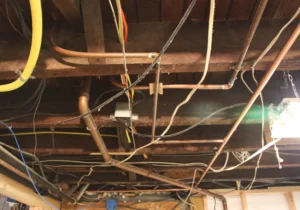
Exposed Basement Ceiling Wiring
How to Handle Exposed Wiring in Basement Ceilings
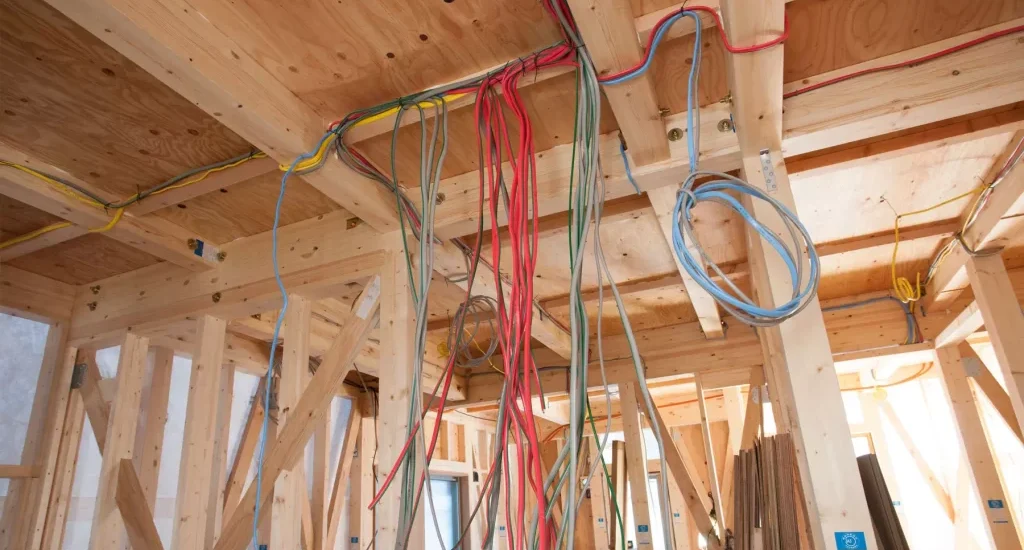
Many people choose to leave their basement ceiling open to save on finishing costs. Exposed basement ceiling wiring is totally fine as long as it follows the code. For exposed wiring basement ceiling installations:
- Wires running through holes in joists are usually protected enough and do not need conduit
- Wires running along the side of joists need to be stapled at regular intervals or placed in conduit
- All junction boxes must remain accessible (do not bury them inside walls or ceilings)
- Use metal boxes in areas where wires might be bumped or hit
Exposed wiring basement ceiling setups look clean and industrial when done neatly. Using consistent stapling, straight runs, and labeled conduit makes the space look organized and professional.
Electrical wiring in basement for unfinished vs. finished spaces
Wiring an Unfinished Basement
Wiring an unfinished basement is simpler in some ways because everything is out in the open. Wiring unfinished basement spaces means you can see every joist, stud, and beam easily. However, unfinished basement wiring still needs to meet code, especially around protecting wires from damage and adding GFCI protection to all outlets.
Wiring a Finished Basement
Wiring a finished basement is more complex because you have to work inside walls and ceilings. A finished basement wiring diagram helps you know exactly where wires will run before walls go up. Planning ahead saves a huge amount of work later.
For wiring basement walls in finished spaces:
- Drill through studs at the same height to keep wire runs level
- Use plastic nail plates to protect wires where they pass through studs
- Pull enough extra wire at each box so you have room to make connections
Read more informative blogs on Mediazon
Conclusion
Basement wiring is one of the most valuable improvements you can make to your home. Whether you are wiring an unfinished basement from scratch or upgrading an existing finished space, following the correct electrical wiring in basement code, using the right conduit, and planning your basement wiring diagram carefully will make the whole project go smoothly. Good basement electrical wiring means safe outlets, bright lights, and a space your whole family can enjoy for years.
If you feel ready to tackle DIY basement wiring, start with a solid basement wiring plan and always pull the right permits. If the project feels too big, a licensed electrician for basement wiring will make sure everything is done right the first time. Either way, a properly wired basement adds real value and comfort to your home. Take your time, follow the code, and enjoy the finished result.
Frequently Asked Questions
Q1: Does all basement wiring need to be in conduit? Not always. Wires inside finished walls usually do not need conduit, but exposed wires on unfinished walls or near concrete do.
Q2: How many outlets are required in a finished basement? Outlets must be no more than 12 feet apart on any finished wall, per NEC basement wiring rules.
Q3: Do basement outlets need to be GFCI? Yes. All basement outlets must be GFCI protected according to the NEC code for electrical wiring in basements.
Q4: Can I do basement wiring myself? Yes, if you pull permits, follow code, and have the work inspected. For complex jobs, hire a licensed electrician.
Q5: What wire size is used for basement outlet wiring? Most basement outlets use 12-gauge wire on a 20-amp circuit for safe and reliable performance.