


Learn everything about roof leak detection, from early warning signs to the best repair solutions. Covers commercial roof leak detection, electronic leak detection equipment, & flat roof systems.
A leaking roof is one of the most stressful problems a homeowner or building manager can face. Water finds its way through the smallest cracks and can cause serious damage to your walls, ceilings, insulation, and even the structure of your home. The good news is that early roof leak detection can save you thousands of dollars in repair costs before things get worse.
Whether you own a home, manage a commercial building, or are dealing with a flat roof in Sydney or anywhere in Australia, knowing how to spot a leak early is the smartest thing you can do. This guide walks you through every sign, cause, and solution related to roof leak detection in simple, clear language anyone can understand.
What Is Roof Leak Detection?
Roof leak detection is the process of finding where water is getting into your roof before it causes serious damage. It is not just about seeing a wet spot on your ceiling. It is about tracing that water back to the exact point where it entered your roof system.
Water is tricky. It can enter through one spot and travel a long distance before it shows up as a stain on your ceiling. That is why proper roof leaking detection requires more than just a quick look. It needs a careful and step by step approach.
Professional roofers use several methods for roofing leak detection, including visual inspection, water testing, infrared scanning, and electronic roof leak detection equipment to find the exact source of the problem.
Common Signs You Need Roof Leak Detection
Catching a roof leak early starts with knowing what to look for. Here are the most common warning signs that tell you something is wrong.
Water Stains on Your Ceiling or Walls
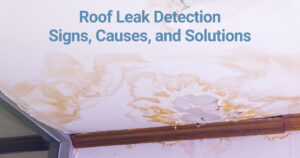
Brown or yellow stains on your ceiling are one of the first signs of a roof leak. These stains often appear after heavy rain and may grow larger over time if the leak is not fixed.
Dripping Water Inside Your Home
This is the most obvious sign. If water is dripping from your ceiling, you need immediate roof leak detection and repair services. Do not wait.
Mold or Mildew Growth
When moisture sits inside your roof or walls for a long time, mold starts to grow. If you notice a musty smell or see dark spots on your walls or ceiling, a hidden roof leak could be the cause.
Damaged or Missing Shingles
Go outside and look at your roof. If you see curled, cracked, or missing shingles, water can easily get in through those gaps. This is one of the top causes of roof leaks in homes.
Sagging Ceiling or Roof Deck
A ceiling that looks like it is bowing downward is holding water. This is a serious sign that needs urgent attention. A sagging roof deck also means water has been sitting there for a long time.
Higher Energy Bills
Surprised? A leaking roof can damage your insulation. When insulation gets wet, it stops working properly, and your heating or cooling system has to work harder. If your energy bills suddenly go up without a clear reason, check your roof.
Main Causes of Roof Leaks
Understanding what causes leaks helps you prevent them. Here are the most common reasons why roofs start leaking.
Old or Worn Out Roofing Materials
Every roofing material has a lifespan. Over time, shingles crack, tiles shift, and membranes start to peel. An aging roof is one of the biggest reasons people need professional roof leaking detection and repair services.
Poor or Failing Flashing
Flashing is the metal material used to seal areas where your roof meets a wall, chimney, or vent. When flashing pulls away or rusts, it creates a direct entry point for water. Flashing failure is behind a huge number of residential and commercial roof leaks.
Clogged Gutters
When gutters fill up with leaves and debris, water has nowhere to go. It backs up onto the roof and can seep under shingles or into the roof edges. Keeping gutters clean is one of the easiest ways to prevent leaks.
Improper Roof Installation
A roof that was not installed correctly from the beginning will develop problems faster. This is common when homeowners choose the cheapest contractor without checking their experience or credentials.
Flat Roof Problems
Flat roofs collect standing water more easily than sloped roofs. This makes flat roof leak detection especially important. Even a small tear or bubble in the membrane of a flat roof can allow water to seep through slowly over time.
Skylights and Roof Vents
Skylights and vents are common weak spots. If they were not sealed properly during installation or the seals have aged and dried out, they can let in water during even light rain.
How to Detect Roof Leaks Step by Step
Learning how to detect roof leaks is something any homeowner can do with a bit of patience and a safe ladder.
Step 1 – Start Inside Your Home
Go into your attic with a flashlight. Look for water stains, dark spots, and soft or wet insulation. Follow the stain upward and toward the roof surface. The actual leak entry point is often higher up the roof than where the damage shows indoors.
Step 2 – Check the Roof Surface
Once you are safely on the roof, look for cracked shingles, lifted flashing, open seams, or damaged vents. Pay close attention to roof valleys where two sections meet, as these areas collect the most rainwater.
Step 3 – Use the Garden Hose Test
Have a helper stay inside the attic while you use a garden hose to run water over different sections of your roof. Start from the bottom and move up slowly. This can help you trace exactly where water is entering.
Step 4—Call a Roofing Professional
If you cannot find the source of the leak yourself, it is time to call a professional. Roofing leak detection services use advanced tools and methods that go far beyond what the eye can see.
Roof Leak Detection Equipment and Technology
Modern roofing professionals use special tools to find leaks faster and more accurately. Here is a look at the most common equipment used in the industry today.
Electronic Roof Leak Detection Equipment
Electronic roof leak detection uses low-voltage electrical current to find breaks in a roofing membrane. Water is a good conductor of electricity. When the current hits a wet spot in the membrane, it completes a circuit and alerts the technician. This method is highly accurate and is especially useful for flat roof leak detection.
If you are looking for electronic roof leak detection equipment for sale, make sure to buy from a certified supplier and have it operated by a trained professional.
Infrared Roof Leak Detection
Infrared roof leak detection uses thermal imaging cameras to detect temperature differences on a roof surface. Wet areas under the roof membrane hold heat differently from dry areas. By scanning the roof at night after the sun goes down, technicians can see exactly where water has collected. This method is noninvasive and works well for both residential and commercial roof leak detection.
Electronic Flat Roof Leak Detection
Electronic flat-roof leak detection is a specific method used for flat or low-slope roofing systems. It includes both low voltage and high voltage scanning depending on the type of roof membrane. The ELD roof leak detection method, short for Electric Leak Detection, is one of the most trusted ways to inspect flat roofs in commercial and industrial buildings.
Roof Water Leak Detection Services
Roof water leak detection services bring all of these tools together into one package. These services include a full inspection, moisture mapping, thermal scanning, and a detailed report of where leaks are found and how to fix them.
Commercial Roof Leak Detection
Commercial buildings face unique challenges when it comes to roof leaks. Large flat roofs, HVAC equipment, drainage systems, and multiple layers of roofing membrane all make it harder to find leaks.
Why Commercial Roof Leak Detection Is Different
In a home, a leak might show up on one ceiling. In a commercial building, a single leak can go unnoticed for months because the water spreads across a much larger area before it shows up as visible damage. That is why routine commercial roof leak detection inspections are so important.
Most commercial properties schedule roof inspections twice a year, usually in spring and fall, to catch any damage before it gets worse.
Tools Used in Commercial Roof Inspection
Commercial roofers rely heavily on electronic roof-leaking detection equipment, infrared roof-leak detection cameras, and sometimes drone technology to scan large roof areas safely and efficiently. The ELD roof leak detection system is especially popular in commercial settings because it can cover a large membrane area quickly.
Roof Leak Detection Sydney and Australia
If you live in Sydney or anywhere in Australia, roof leak detection is something to take seriously given the local weather patterns. Heavy summer storms, tropical downpours, and strong winds put Australian roofs under real pressure every year.
Roof Leak Detection Sydney Services
Sydney homeowners and property managers have access to a wide range of professional roof leak detection and repair services in Australia. Local roofing companies offer everything from basic inspections to full electronic flat roof leakage detection services. When searching for roof leakage detection Sydney providers, always check their reviews, licensing, and whether they offer a written report after the inspection.
What to Look for in a Roof Leak Detection and Repair Service in Australia
When choosing a roofing company in Australia, look for:
- Licensed and insured contractors
- Experience with your specific roof type (flat, pitched, metal, tile)
- Use of modern roofing leak detection systems
- Transparent pricing and written quotes
- Warranty on repair work
Best Repair Solutions After Roof Leak Detection
Once you have identified where the leak is coming from, the next step is fixing it properly. Here are the most common repair solutions used after roof leak detection.
Patching Damaged Shingles
For minor damage, replacing a few shingles is a quick and affordable fix. A professional can do this in a few hours and stop the leak immediately.
Resealing Flashing
If your flashing has lifted or rusted, a roofer can reseal it or replace it entirely. This is one of the most common repairs that follow a roof leak inspection.
Applying Roof Sealant or Coating
For flat roofs with small cracks or bubbles in the membrane, a waterproof sealant or coating can extend the life of the roof. This is often used after electronic flat roof leak detection identifies a problem area.
Full Roof Membrane Replacement
When a flat roof has widespread damage, replacing the entire membrane is sometimes the only lasting solution. This is common in older commercial buildings where the roofing leak detection system has found damage across multiple areas.
Gutter Cleaning and Repair
Sometimes fixing the gutters is all it takes to stop water from backing up onto the roof. Clean gutters and properly sealed gutter joints can prevent many roof leaks from happening in the first place.
How to Prevent Roof Leaks Before They Start
Prevention is always better than repair. Here are simple habits that can keep your roof in great shape year round.
- Schedule a roof inspection at least once a year
- Clean your gutters every three to six months
- Trim tree branches that hang over your roof
- Check your attic after every heavy storm
- Fix small cracks or lifted shingles as soon as you spot them
- Ask a roofer about installing a roofing leak detection system for early alerts
Read more articles on Mediazon
Conclusion
Roof leak detection is not something to put off. A small, unnoticed leak can turn into a massive and costly repair over time. Whether you are dealing with a home or a large commercial property, identifying the source of a leak early is always the smartest move. Modern tools like infrared roof leakage detection and electronic roof leak detection equipment have made this process faster, more accurate, and less invasive than ever before.
If you are in Sydney or elsewhere in Australia and need professional roof leaking detection and repair services, do not wait for visible water damage to appear. Reach out to a licensed roofing professional, ask about the roofing leak detection systems they use, and get a full inspection done. Taking action today protects your property, your wallet, and your peace of mind for years to come.
Frequently Asked Questions
Q1: What is roof leak detection? It is the process of finding exactly where water is entering your roof before it causes serious damage inside your home or building.
Q2: How does electronic roof leak detection work? It uses a low-voltage electrical current on the roof surface. Water conducts electricity, so any wet spot in the membrane triggers an alert that shows where the leak is.
Q3: Can I detect a roof leak myself? Yes, for basic signs like water stains or missing shingles. But for hidden leaks, especially on flat roofs, a professional with proper equipment is needed.
Q4: How much does commercial roof leak detection cost in Australia? Costs vary depending on roof size and method used. Most services range from a few hundred to a few thousand dollars for larger commercial properties.
Q5: What is the best method for flat roof leak detection? Electronic flat-roof leak detection and infrared roof-leak detection are both highly effective and are the most trusted methods used by roofing professionals today.